Beagle’s Sandwich Discovery Shines Light on Airport Security
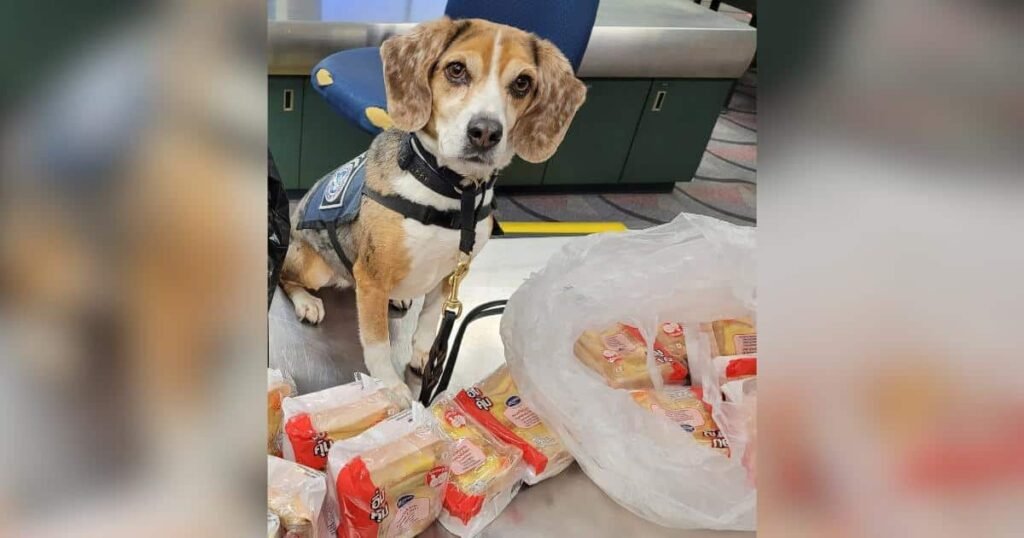
In a surprising turn of events at an international airport, a diligent Beagle named Merla became an unexpected sensation after uncovering a staggering 100 undeclared sandwiches in a passenger’s luggage. This incident not only drew attention online but also emphasized the critical role of detection dogs in safeguarding agriculture, livestock, and the environment from potential threats entering the United States.
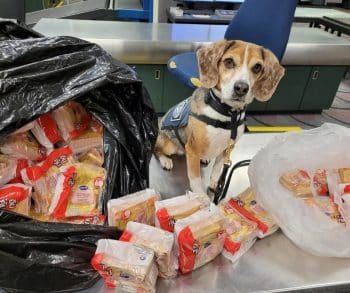
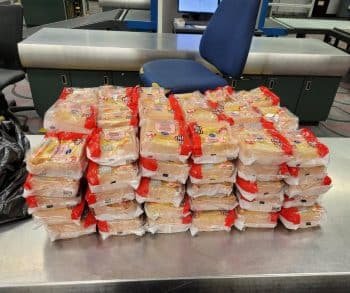
The U.S. Customs and Border Protection (CBP) Office of Field Operations shared a delightful photo of Merla, showcasing her alongside two large bags filled with the confiscated sandwiches. This impressive detection was made possible by her keen sense of smell, which led her to discover 100 pork and chicken sandwiches tucked away in a traveler’s belongings.
On April 16, CBP took to Facebook, humorously reminding travelers, “Though it might be stale at this point, lettuce remind you that you must declare agriculture items (including meats!) when entering the US.”
All 100 sandwiches were seized and ultimately destroyed to prevent any potential issues.
These sandwiches were identified as products from Le Pan, a well-known Thai bakery, whose packaged goods are often available at convenience stores like 7-Eleven. Although the sandwiches were relatively inexpensive, the risk associated with their contents was significant.
For Merla, this was just another day on the job. However, her extraordinary find quickly garnered online attention, showcasing the remarkable skills of detection dogs dedicated to examining luggage and cargo for restricted agricultural items.
A Powerful Nose Protecting America’s Farms
While it may seem harsh to confiscate food, there are vital reasons for such agricultural restrictions.
As stated by U.S. Customs and Border Protection, certain food products can harbor plant pests or foreign animal diseases that threaten crops, livestock, and ecosystems. Even seemingly harmless items carry risks if not appropriately inspected before entering the country.
This is why travelers coming into the United States must declare agricultural products, including meats, fruits, vegetables, seeds, plants, soil, animals, and animal-derived items. These regulations apply regardless of whether the items are in checked luggage, carried onboard, or transported in a vehicle.

When such items are found, agriculture specialists evaluate if they meet entry requirements. If they do not, confiscation occurs to thwart potential outbreaks or environmental harm.
Travelers who neglect to declare prohibited agricultural products can face fines of up to $1,000 for a first-time non-commercial offense, with more severe penalties in commercial situations.
Merla Joins a Long Line of Canine Protectors
Merla’s viral moment follows a recent success story involving a detector eagle named Kokoe.
Earlier this year, Kokoe assisted in uncovering undeclared food items brought by travelers from Thailand, including mangoes, loquats, planting seeds, and chicken bouillon. Most of these items were destroyed after inspection, although a piece of fried chicken and some betel nuts were permitted to accompany their owners.
Such stories provide insight into the daily operations of detector dogs across the nation. Their heightened sense of smell equips them to detect specific scents that humans might overlook. Some can even identify tiny agricultural products concealed deep within luggage in seconds.
While a customs officer may require several minutes to manually inspect a suitcase, a trained dog can swiftly scan the same bag and alert their handlers to potential issues almost instantly.
From Rescue Dogs to National Heroes
The USDA initiated its detector dog program, known as the Beagle Brigade, in 1984 at Los Angeles International Airport with just a single Beagle. Since its inception, the program has significantly expanded, now featuring over 180 detector dog teams operating throughout the United States.
One of the most heartwarming aspects of this initiative is that many of these canine recruits are sourced from rescue shelters or generously donated by private owners before receiving specialized training.
These dogs are trained to identify agricultural products and signal their findings through conditioned responses. Some sit calmly next to suspicious luggage, while others gently paw at bags to alert their handlers.
Beagles are particularly suited for this role due to their exceptional sense of smell, compact size, friendly demeanor, and strong motivation for food. They are approachable to travelers while remaining highly focused on their duties.
For Merla, the discovery of 100 hidden sandwiches may have been just another task, but her commitment highlights the significant role these dogs play daily. Behind every wagging tail lies a highly trained working dog dedicated to protecting farms, livestock, and ecosystems, one suitcase at a time.